
At The Brain and Spine Centre, we specialize in the diagnosis and surgical treatment of neurological and spinal disorders. Dr. Muhammad Aqeel Natt, a leading neurosurgeon in Lahore, provides advanced, safe, and compassionate care for patients.

Spina Bifida
Spina bifida is a neural tube defect in which the spine and spinal cord do not form properly before birth, leading to a gap in the vertebrae and varying degrees of nerve involvement. At The Brain and Spine Centre, Dr. Muhammad Aqeel Natt provides comprehensive care for spina bifida at Farooq Hospital, West Wood Branch, Lahore, from prenatal counseling and newborn surgery to long‑term neurological and orthopedic follow‑up.
Our goal is simple: protect the exposed spinal cord, prevent infection and deterioration, and support mobility, continence, and independence over a child’s lifetime.
What Is Spina Bifida?
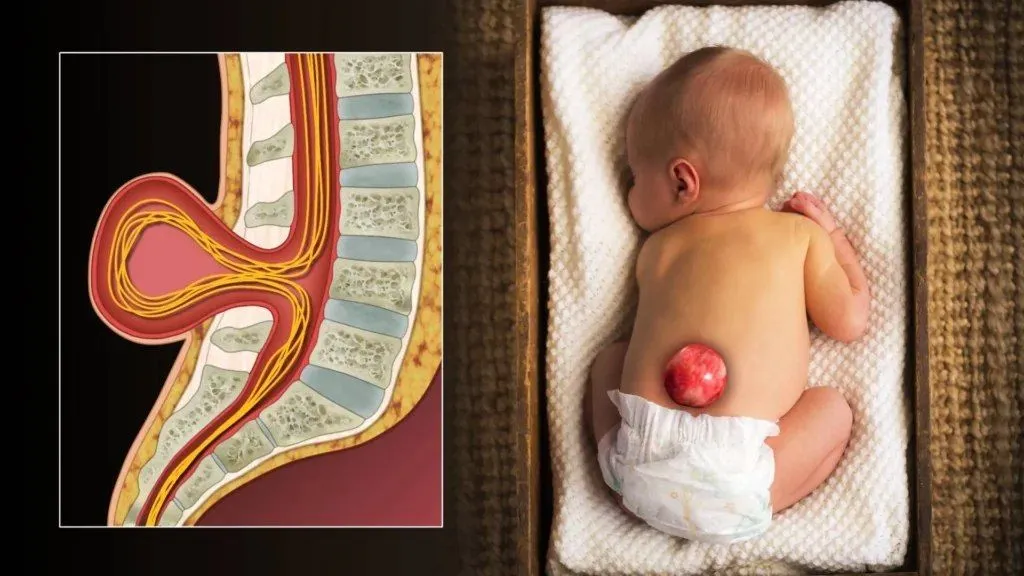
Spina bifida is a congenital defect of the spine and spinal cord that arises when the neural tube fails to close completely during the first month of pregnancy. It is part of the spectrum of spinal dysraphism and ranges from mild, often incidental, defects to severe open lesions with major neurological disability.
Main types:
Spina bifida occulta:
The mildest and most common form; there is a small defect in one or more vertebrae, but the spinal cord and meninges remain in place and are usually normal. Often asymptomatic and discovered incidentally; may show a tuft of hair, dimple, or small birthmark over the defect.
Meningocele:
The meninges protrude through a bony defect, forming a fluid‑filled sac; the spinal cord itself remains in normal position, and neurological function is often preserved or only mildly affected.
Myelomeningocele (open spina bifida):
The most severe form; both meninges and part of the spinal cord and/or nerve roots protrude through the defect, typically in the lumbosacral region, forming a sac that may be covered by thin skin or exposed. This is associated with significant motor and sensory deficits, bladder and bowel dysfunction, and a high risk of hydrocephalus and Chiari II malformation.
Symptoms of Spina Bifida
Symptoms differ by type and by lesion level.
Occulta:
Often no symptoms; possible skin signs over the lower spine (dimple, hairy patch, fatty lump, birthmark).
Some closed defects can be associated with tethered cord and later leg or bladder symptoms.
Meningocele:
Visible fluid‑filled sac or lump over the spine at birth.
Neurological function frequently near normal; occasional bladder/bowel issues.
Myelomeningocele (open spina bifida):
Obvious sac or “bubble” over the spine at birth, often in the lumbosacral region, sometimes with exposed neural tissue.
Weakness or paralysis of legs; inability to walk or need for braces/wheelchair depending on level.
Loss of sensation below the lesion, increasing risk of injuries and pressure sores.
Bowel and bladder incontinence due to disruption of sacral nerves.
Orthopedic deformities: clubfoot, hip dislocation, knee deformities, scoliosis.
Hydrocephalus (CSF buildup in brain) and Chiari II malformation, which may cause feeding difficulty, stridor, apnea, arm weakness, or swallowing problems.
Diagnosis
Prenatal:
Elevated maternal serum alpha‑fetoprotein (AFP) and abnormal second‑trimester screening suggest open neural tube defect.
High‑resolution obstetric ultrasound at 16–18 weeks often shows spinal defects and indirect cranial signs (lemon and banana signs) of myelomeningocele.
Fetal MRI refines diagnosis and evaluates associated brain abnormalities.
Postnatal:
Physical exam reveals sac, cutaneous stigmata (dimples, hairy patches, dermal sinus), deformities, and neurologic deficits.
Ultrasound in neonates and MRI of the spine and brain to define lesion level, cord involvement, presence of tethered cord, hydrocephalus, and Chiari II.
Urodynamic studies assess bladder function; renal ultrasound screens for reflux and kidney damage.
Treatment Options
Management is lifelong and multidisciplinary.
Immediate neonatal care (myelomeningocele/meningocele):
Protect the lesion with sterile, moist dressings; prone positioning; prompt antibiotics to reduce infection risk.
Early surgical closure (ideally within 24–72 hours of birth) of the back defect to prevent CSF leak and infection and to preserve remaining neurological function.
Hydrocephalus/Chiari II:
Ventriculoperitoneal (VP) shunt placement or endoscopic third ventriculostomy to treat hydrocephalus.
Posterior fossa decompression for symptomatic Chiari II in selected cases.
Long-term management:
Bladder and bowel programs including clean intermittent catheterization, anticholinergics, antispasmodics, and bowel regimens to preserve renal function and continence.
Orthopedic interventions (casting, bracing, tendon releases, spinal fusion) to correct deformities and improve mobility.
Physiotherapy and occupational therapy to optimize strength, transfers, wheelchair skills, and ADLs.
Management of tethered cord if neurological or urological function deteriorates over time.
The Procedure
At The Brain and Spine Centre:
Newborn stage: urgent evaluation of lesion, brain imaging for hydrocephalus, multidisciplinary planning for back closure and CSF diversion when needed.
Surgical repair: gentle neural placode dissection, dural closure, and layered soft‑tissue closure to create a watertight repair and protect the cord.
Follow-up surgeries: shunt insertion or revision, tethered cord release, orthopedic corrections, and urological procedures are planned as the child grows.
Recovery & Aftercare
Length of initial hospital stay depends on severity, presence of hydrocephalus, and associated anomalies; typically 1–3 weeks for myelomeningocele repair and shunt placement.
Ongoing follow‑up in spina bifida clinic with neurosurgery, orthopedics, urology, rehab, and pediatrics for surveillance of shunt function, tethered cord, orthopedic changes, skin integrity, and renal health.
Early intervention and school‑based support improve cognitive, social, and educational outcomes.
Results You Can Expect
Outcomes depend on lesion level, completeness of neurologic involvement, presence of hydrocephalus, and quality of long‑term care.
Many children with low‑lumbar or sacral lesions achieve household or community ambulation with braces; higher lesions often require wheelchairs.
With aggressive urological management, most can preserve kidney function and achieve social continence.
With modern neurosurgical, orthopedic, and rehab care, survival and quality of life have improved significantly, and many individuals with spina bifida live into adulthood with meaningful independence.
Why Choose The Brain and Spine Centre
Led by Dr. Muhammad Aqeel Natt, with extensive experience in neonatal myelomeningocele repair, hydrocephalus management, and tethered cord surgery. Multidisciplinary collaboration with pediatrics, urology, orthopedics, physiotherapy, and rehabilitation to deliver integrated, lifelong spina bifida care. Access to modern imaging and operative facilities at Farooq Hospital, West Wood Branch, Lahore, enabling early diagnosis, safe surgery, and structured follow‑up.
Cost of Spina Bifida Treatment
Costs vary with lesion severity, need for neonatal surgery, shunt procedures, orthopedic and urological surgeries, duration of hospitalization, and long‑term rehabilitation. Personalized cost estimates are provided after clinical and imaging assessment.
Frequently Asked Questions (FAQs)
Can I know Dr. Muhammad Aqeel Natt’s credentials?
What types of brain tumours do you treat?
Is the surgery safe?
Do I need long-term follow-up after surgery?
Are you having health problems? Contact us today!
Address Business
Contact With Us
Call Us 24/7: 0318 4065914
Working Time
Sunday: 8.30am - 19.30pm
