
At The Brain and Spine Centre, we specialize in the diagnosis and surgical treatment of neurological and spinal disorders. Dr. Muhammad Aqeel Natt, a leading neurosurgeon in Lahore, provides advanced, safe, and compassionate care for patients.
Alzheimer’s
Alzheimer’s disease is the most common cause of dementia, characterized by progressive cognitive decline due to accumulation of amyloid-beta plaques and tau tangles in the brain, leading to neuronal loss and synaptic dysfunction. At The Brain and Spine Centre, Dr. Muhammad Aqeel Natt provides comprehensive Alzheimer’s evaluation and management at Farooq Hospital, West Wood Branch, Lahore, including advanced diagnostic testing, symptomatic treatment, and clinical trial access for disease-modifying therapies.
Our goal is simple: establish early diagnosis to optimize symptomatic treatment, provide caregiver support, and enroll eligible patients in clinical trials for emerging disease-modifying therapies.
What Is Alzheimer’s Disease?
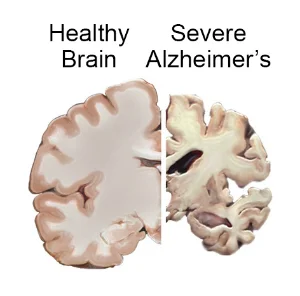
Alzheimer’s disease is a neurodegenerative disorder causing progressive memory loss and cognitive impairment due to extracellular amyloid-beta plaques, intracellular neurofibrillary tau tangles, synaptic loss, and neuronal death beginning in the hippocampus and entorhinal cortex before spreading. It accounts for 60-80% of dementia cases, typically presenting after age 65 (late-onset) but can occur earlier (early-onset <65). Risk factors include APOE-ε4 genotype, vascular disease, head trauma, and lifestyle factors (obesity, inactivity).
Symptoms of Alzheimer’s Disease
Symptoms progress through mild, moderate, and severe stages over 8-10 years.
Early/mild stage:
Memory loss disrupting daily life (forgetting recent events, repeating questions).
Challenges with planning/problem-solving, time disorientation, trouble with familiar tasks.
Poor judgment, withdrawal from work/hobbies.
Moderate stage:
Confusion with time/place, trouble recognizing family, language problems (word-finding).
Personality/mood changes, wandering, agitation.
Severe stage:
Profound memory loss, loss of recognition of self/family, inability to communicate, requiring full assistance.
Diagnosis
No single test confirms Alzheimer’s; diagnosis excludes other causes.
Clinical evaluation:
Detailed history from patient/caregiver: symptom onset, progression, functional impairment.
Neurological exam, mental status testing (MMSE, MoCA: memory, attention, language, visuospatial).
Laboratory/imaging:
Blood tests: rule out vitamin B12 deficiency, thyroid, syphilis.
Brain MRI/CT: exclude stroke, tumor, NPH; assess atrophy (hippocampal/entorhinal).
Amyloid/tau PET, CSF biomarkers (low Aβ42, high tau/p-tau), blood biomarkers emerging for amyloid confirmation.
Differential diagnosis: vascular dementia, Lewy body, frontotemporal, depression, medication effects.
Treatment Options
No cure; symptomatic and supportive care.
Pharmacologic:
Cholinesterase inhibitors (donepezil, rivastigmine, galantamine): mild-moderate; improve cognition/behavior 6-12 months.
NMDA antagonist (memantine): moderate-severe; stabilizes glutamate excitotoxicity.
Emerging disease-modifying: anti-amyloid (lecanemab, donanemab) for early disease; anti-tau in trials.
Non-pharmacologic:
Cognitive stimulation therapy, occupational therapy.
Caregiver support, advance care planning.
Neurosurgical (limited role): DBS experimental for agitation; shunt if comorbid NPH.
Management Approach
At The Brain and Spine Centre:
Multidisciplinary assessment: neurology, neuropsychology, neuroimaging, biomarkers if available.
Symptom optimization: cholinesterase inhibitors + memantine; behavioral management.
Clinical trial screening: early-stage patients for disease-modifying therapies.
Recovery & Aftercare
No recovery; progressive decline. Focus on quality of life:
Regular cognitive assessments (every 6-12 months).
Caregiver respite, home safety modifications.
Palliative care integration as disease advances.
Results You Can Expect
Cholinesterase inhibitors: 6-12 months cognition stabilization; modest functional benefit.
Anti-amyloid: 20-30% slower decline in early mild cognitive impairment (MCI)/mild AD.
Life expectancy: 4-8 years post-diagnosis; up to 20 years if early-onset.
Why Choose The Brain and Spine Centre
Comprehensive dementia evaluation distinguishing Alzheimer’s from treatable mimics (NPH, B12 deficiency). Access to advanced biomarkers/PET if available. Clinical trial opportunities for emerging therapies. Multidisciplinary team: neurology, neuropsychiatry, social work, palliative care. Caregiver support programs.
Cost of Alzheimer’s Disease Management
Diagnostic workup (MRI, labs, cognitive testing).
Medications: cholinesterase inhibitors monthly; anti-amyloid infusions expensive.
Estimates post-assessment.
Frequently Asked Questions (FAQs)
Can I know Dr. Muhammad Aqeel Natt’s credentials?
What types of brain tumours do you treat?
Is the surgery safe?
Do I need long-term follow-up after surgery?
Are you having health problems? Contact us today!
Address Business
Contact With Us
Call Us 24/7: 0318 4065914
Working Time
Sunday: 8.30am - 19.30pm
