
At The Brain and Spine Centre, we specialize in the diagnosis and surgical treatment of neurological and spinal disorders. Dr. Muhammad Aqeel Natt, a leading neurosurgeon in Lahore, provides advanced, safe, and compassionate care for patients.
Spinal Tumours
Spinal tumours require expert diagnosis and carefully planned treatment to relieve pressure on the spinal cord and nerves and prevent permanent disability. At The Brain and Spine Centre, Dr. Muhammad Aqeel Natt offers comprehensive care for spinal tumours at Farooq Hospital, West Wood Branch, Lahore, combining advanced microsurgical and oncologic techniques with compassionate support.
Our goal is simple: remove or control the tumour safely, protect spinal cord function, and support recovery for the best possible quality of life.
What Are Spinal Tumours?
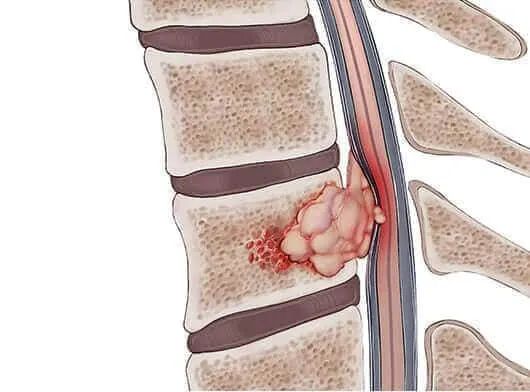
Spinal tumours are abnormal growths that develop in or around the spinal cord, nerve roots, or vertebrae. They may be benign (non-cancerous) or malignant (cancerous), and may start in the spine (primary) or spread from cancers elsewhere in the body (metastatic). By location, tumours are classified as:
- Extradural (outside the dura, often in the vertebrae)
- Intradural–extramedullary (inside the dura but outside the spinal cord)
- Intramedullary (within the spinal cord itself)
Symptoms of Spinal Tumours
Symptoms depend on tumour size, type, and location, but most are due to compression of the spinal cord or nerves.
Common symptoms include:
- Persistent back or neck pain that gradually worsens, often worse at night or at rest
- Pain radiating into arms, chest, abdomen, or legs
- Numbness, tingling, or loss of sensation in arms, legs, or chest
- Muscle weakness, clumsiness, difficulty walking, or frequent falls
- Loss of balance or coordination
- Loss of bowel or bladder control in more advanced cases
Any new, persistent, or progressive back pain with neurological symptoms warrants prompt evaluation.
Diagnosis
Diagnosis aims to identify tumour type, location, and degree of cord or nerve compression.
Key tools:
- Clinical and neurological examination to assess strength, sensation, reflexes, gait, and sphincter function.
- MRI of the spine is the preferred and most reliable test for detecting spinal tumours and spinal cord compression. MRI provides detailed images of spinal cord, nerve roots, vertebrae, and soft tissue, and helps distinguish benign from malignant lesions.
- CT scan helps assess bone involvement, vertebral destruction, and stability, complementing MRI.
- Biopsy (open or needle) may be required to confirm the exact tumour type and guide oncologic treatment.
Treatment Options
Treatment is individualized based on tumour type (benign vs malignant, primary vs metastatic), location, neurological status, and overall health.
- Observation with regular MRI may be appropriate for small, asymptomatic, benign tumours not compressing the spinal cord.
- Surgery aims to decompress the spinal cord and nerves, remove as much tumour as safely possible, and stabilize the spine when needed. Techniques include microsurgical resection, laminectomy, and instrumented fusion.
- Radiotherapy (including stereotactic radiosurgery and stereotactic body radiotherapy) is used postoperatively, for inoperable lesions, or for metastatic disease, providing high local tumour control with acceptable toxicity.
- Systemic treatments (chemotherapy, targeted therapy, immunotherapy) may be used for specific primary cancers and metastatic tumours in coordination with oncology.
The Procedure
Our process prioritizes safety, spinal cord protection, and oncologic control:
- Detailed clinical assessment and high-resolution MRI/CT to map tumour and plan the safest approach.
- Surgical decompression and, when required, stabilization with screws and rods to relieve pressure and restore spinal stability.
- Postoperative radiotherapy or stereotactic radiosurgery when indicated to reduce recurrence risk and control residual disease.
Recovery & Aftercare
Recovery depends on tumour type, extent of nerve damage, and treatment received.
- Many patients experience significant relief of pain and improvement in strength and walking after timely decompression and stabilization.
- Early, structured rehabilitation (physiotherapy, occupational therapy) is essential to restore mobility, balance, and independence.
- Regular MRI and clinical follow-up monitor for recurrence, progression, or late effects of treatment.
Results You Can Expect
With modern surgery and radiotherapy:
- Benign tumours often achieve durable control or cure with good long-term function when treated before severe neurological deficit develops.
- For spinal metastases, combined surgery and precision radiotherapy provide excellent pain relief, high local tumour control (over 90% at 5 years in selected series), and acceptable long-term toxicity.
- Many patients are able to maintain or regain the ability to walk and perform daily activities independently when treated early.
Why Choose The Brain and Spine Centre
Led by Dr. Muhammad Aqeel Natt, specialist neurosurgeon with extensive expertise in spinal tumour surgery, spinal cord decompression, and stabilization. Access to advanced MRI and CT for high-precision diagnosis and surgical planning. Experience with microsurgical tumour resection combined with radiotherapy planning in collaboration with oncology and radiation oncology teams. Convenient location at Farooq Hospital, West Wood Branch, Lahore, offering comprehensive imaging, surgical, and rehabilitation services.
Cost of Spinal Tumour Treatment
Costs vary with tumour type, need for surgery and fixation, radiotherapy, systemic treatments, hospital stay, and rehabilitation intensity. Personalized estimates are provided after consultation and imaging review.
Frequently Asked Questions (FAQs)
Can I know Dr. Muhammad Aqeel Natt’s credentials?
What types of brain tumours do you treat?
Is the surgery safe?
Do I need long-term follow-up after surgery?
Are you having health problems? Contact us today!
Address Business
Contact With Us
Call Us 24/7: 0318 4065914
Working Time
Sunday: 8.30am - 19.30pm
