
At The Brain and Spine Centre, we specialize in the diagnosis and surgical treatment of neurological and spinal disorders. Dr. Muhammad Aqeel Natt, a leading neurosurgeon in Lahore, provides advanced, safe, and compassionate care for patients.
A-typical Facial Pain Management
A-typical facial blocks are minimally invasive injections delivering local anesthetic and/or corticosteroid to facial nerves or trigger points to treat atypical facial pain, trigeminal neuralgia, post-herpetic neuralgia, and other neuropathic facial conditions refractory to medical management. At The Brain and Spine Centre, Dr. Muhammad Aqeel Natt performs precision-guided facial nerve blocks at Farooq Hospital, West Wood Branch, Lahore, offering diagnostic confirmation and therapeutic relief for complex facial pain syndromes.
Our goal is simple: identify and target aberrant neural pain pathways in the face, provide rapid and prolonged relief, and avoid unnecessary medication escalation or invasive procedures.
What Are A-typical Facial Blocks?
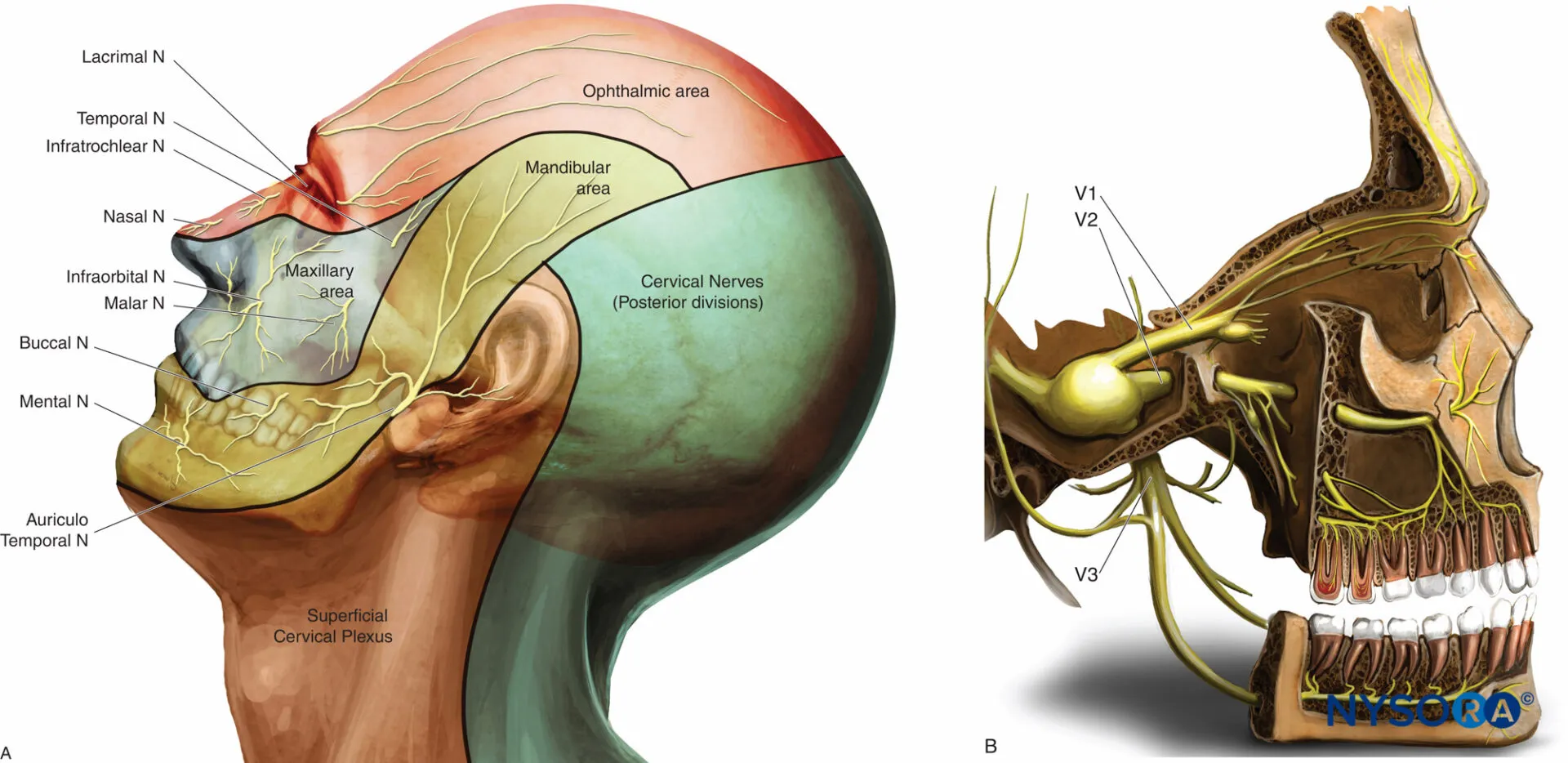
A-typical facial blocks are targeted nerve blocks addressing non-classic facial pain distributions—atypical trigeminal neuralgia, occipital neuralgia, post-herpetic neuralgia, post-traumatic facial pain, and myofascial trigger point pain—using ultrasound or fluoroscopic guidance to deliver medication precisely to the nerve or affected tissue. These blocks serve dual purposes: diagnostic confirmation of the pain source and therapeutic relief through local anesthetic and anti-inflammatory action.
Symptoms and Indications
A-typical facial blocks address pain patterns not fitting standard neuralgia phenotypes.
Common features and indications:
Atypical trigeminal neuralgia: facial pain not confined to classic V1/V2/V3 distributions, constant or episodic background pain with superimposed paroxysms.
Occipital neuralgia: posterior scalp, neck, and occipital region pain radiating from upper cervical nerve roots (C2-C3 greater occipital nerve).
Post-herpetic neuralgia (PHN): burning, lancinating pain in herpes zoster distribution (V1, V2, V3) persisting >3 months after rash.
Post-traumatic facial pain: neuropathic pain after facial trauma, dental procedures, or facial surgery.
Myofascial trigger point pain: localized muscle tension/knots causing referred facial pain.
Pain refractory to medical management: inadequate response to tricyclic antidepressants, gabapentinoids, or opioids.
Diagnosis
Accurate diagnosis guides appropriate block selection.
Clinical evaluation: dermatomal mapping, trigger point identification, symptom character (burning vs sharp vs aching).
MRI/CT: rules out structural lesions (tumours, vascular malformations, multiple sclerosis).
Trial of conservative therapy: topical agents (lidocaine patches, capsaicin), oral medications, previous injections.
Types of A-typical Facial Blocks
Greater occipital nerve (GON) block: for occipital neuralgia and posterior scalp pain.
Target: GON at occipital artery crossing, lateral to occipital artery.
Landmark or ultrasound-guided; 2-3 ml anesthetic ± steroid.
Supraorbital/supratrochlear blocks: for V1 (ophthalmic) distribution pain.
Target: supraorbital and supratrochlear nerves exiting foramina/notches on upper orbit.
Ultrasound-guided; palpable bony landmarks guide placement.
Infraorbital nerve block: for V2 (maxillary) distribution pain.
Target: infraorbital nerve exiting infraorbital foramen below orbit.
Intraoral or skin approach; 1-2 ml anesthetic ± steroid.
Inferior alveolar/lingual nerve blocks: for V3 (mandibular) distribution pain.
Target: inferior alveolar nerve near lingula of mandible.
Intraoral approach; 1-2 ml anesthetic ± steroid.
Auricular nerve blocks: for ear/temporal pain.
Target: great auricular nerve at SCM, superficial temporal nerve anterior to ear.
Landmark or ultrasound-guided.
Trigger point injections: for myofascial pain.
Target: palpable taut muscle bands, local anaesthetic infiltration with or without botulinum toxin.
The Procedure
Outpatient, 10-20 minutes depending on block type and guidance modality.
Key steps:
Patient positioning (supine, side-lying, or seated) based on target nerve.
Ultrasound or landmark identification of anatomical targets.
Skin antisepsis and sterile technique.
25-27G needle placed in proximity to nerve or muscle; perineural spread confirmed by ultrasound or by resistance feedback.
Injection of local anesthetic (lidocaine 1-2%, bupivacaine 0.5%, or mepivacaine 1.5%) 2-5 ml depending on block type.
Optional: steroid (dexamethasone 4 mg, triamcinolone 10-20 mg) for prolonged effect in inflammatory conditions.
Observation 15-30 minutes; monitor for rare complications (vascular injection, intraneuronal placement).
Recovery & Aftercare
Immediate pain relief from anesthetic; duration 2-4 hours.
Steroid effect onset 24-48 hours; peak 3-7 days; duration 2-12 weeks.
Avoid facial/trigger point trauma 24 hours post-injection.
Return to normal activities same day.
Repeat blocks every 3-6 months if effective, up to 3-4 per year per nerve.
Combine with PT (cervical/facial mobility, trigger point release), topical agents, and oral medications for optimal long-term outcomes.
Results You Can Expect
Diagnostic: >50% pain relief confirms nerve/site as pain generator.
Therapeutic: 60-80% achieve significant relief 1-12 weeks depending on steroid addition.
Post-herpetic neuralgia: 50-70% benefit with GON blocks, infraorbital blocks.
Occipital neuralgia: 70-90% pain relief with GON blocks.
Trigger point injections: 60-75% achieve functional improvement 2-4 weeks.
Sustained benefit: 30-50% with serial blocks; some achieve long-term remission.
Complications: rare (<1%); include infection, hematoma, temporary increased pain, vascular puncture (avoided by ultrasound).
Why Choose The Brain and Spine Centre
Led by Dr. Muhammad Aqeel Natt, with expertise in complex facial pain disorders, atypical presentations, and precision nerve blocks. Ultrasound and fluoroscopic guidance ensuring safe, accurate needle placement away from vital structures. Diagnostic and therapeutic dual-role approach: confirms pain origin and provides relief, guiding escalation to neuromodulation (RFA, pulsed RF, spinal cord stimulation) or neurosurgery if indicated. Integrated multidisciplinary care: coordination with neurology, pain management, psychiatry (for comorbid depression/anxiety common in chronic facial pain), and physical therapy.
Cost of A-typical Facial Blocks
Outpatient procedure; diagnostic blocks typically lower cost than therapeutic series with steroid. Cost-effective alternatives to prolonged medication trials, preventive hospitalizations, or surgical interventions. Detailed cost estimates provided after clinical assessment and block selection.
Frequently Asked Questions (FAQs)
Can I know Dr. Muhammad Aqeel Natt’s credentials?
What types of brain tumours do you treat?
Is the surgery safe?
Do I need long-term follow-up after surgery?
Are you having health problems? Contact us today!
Address Business
Contact With Us
Call Us 24/7: 0318 4065914
Working Time
Sunday: 8.30am - 19.30pm
