
At The Brain and Spine Centre, we specialize in the diagnosis and surgical treatment of neurological and spinal disorders. Dr. Muhammad Aqeel Natt, a leading neurosurgeon in Lahore, provides advanced, safe, and compassionate care for patients.
CSF rhinorrhea
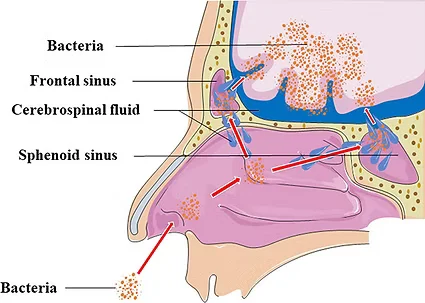
CSF rhinorrhea is the leakage of cerebrospinal fluid through the nasal cavity due to a dural tear or skull base defect creating abnormal communication between the subarachnoid space and sinonasal cavity, risking ascending meningitis if untreated. At The Brain and Spine Centre, Dr. Muhammad Aqeel Natt manages CSF rhinorrhea at Farooq Hospital, West Wood Branch, Lahore, using advanced imaging, intrathecal fluorescein, and endoscopic or open skull base repair for definitive closure.
Our goal is simple: confirm diagnosis with beta-2 transferrin, localize the skull base defect precisely, and achieve multilayer closure to prevent meningitis and recurrence.
What Is CSF Rhinorrhea?
CSF rhinorrhea occurs when cerebrospinal fluid (CSF) leaks through a dural/skull base defect into the nasal cavity, typically presenting as clear unilateral nasal discharge; it may be traumatic (head injury), iatrogenic (endoscopic sinus surgery), spontaneous (idiopathic or raised ICP), or tumor-related. The cribriform plate (olfactory region) is the most common site (35-45%), followed by sphenoid sinus and fovea ethmoidalis.
Symptoms of CSF Rhinorrhea
Symptoms are often subtle but progressive if untreated.
Common features:
Clear, watery unilateral nasal discharge, worsening with head-down position, Valsalva, or straining; “sweet/salty” taste.
Positional headache (low-pressure), neck stiffness, anosmia.
Recurrent meningitis (bacterial, up to 30% untreated cases); otorrhea if middle ear involvement.
Encephaloceles/meningoceles: visible nasal mass, CSF pulsation.
Diagnosis
Rapid confirmation prevents complications.
Clinical suspicion: unilateral clear rhinorrhea + meningitis history.
Confirmation:
Beta-2 transferrin test: 99% specific/sensitive for CSF (distinguishes from nasal mucus).
Localization:
High-resolution CT (HRCT): bony defect, encephaloceles (sensitivity 60-80%).
MR cisternography (MRC): CSF leak visualization, high sensitivity.
Intrathecal fluorescein: intraoperative (0.1 ml/10 ml CSF) or diagnostic; green leak under blue light.
Endoscopy: rhinorrhea site visualization.
Treatment Options
Conservative (small/spontaneous leaks):
Bed rest (head elevated 30°), lumbar drain, avoid straining; 50-70% spontaneous closure.
Surgical repair (indicated):
Persistent leak >7-14 days, meningitis, large defect, encephalocele.
Endoscopic endonasal repair: first-line; multilayer closure (gelfoam, fat, fascia, nasal mucosa); 90-95% success.
Open (craniotomy): cribriform plate, petrous apex defects; vascularized flaps.
The Procedure
Endoscopic repair (90% cases):
General anesthesia, lumbar drain placed.
Intrathecal fluorescein for intraoperative leak visualization.
Endoscopic defect exposure; dural repair (fat graft, fascia lata, fibrin glue); nasal packing (dissolvable).
Lumbar drain 5-7 days; antibiotics, head elevation.
Recovery & Aftercare
Hospital: 5-10 days; lumbar drain weaned.
Avoid Valsalva, nose-blowing 4-6 weeks.
CT/MRI follow-up 3 months, 1 year.
Recurrence: 5-10%; revision success 85%.
Results You Can Expect
Endoscopic repair: 90-97% primary success; meningitis risk <5% post-repair.
Spontaneous closure: 50-85% small traumatic leaks.
Poor prognostic: high-flow leaks, obese patients, multiple defects.
Why Choose The Brain and Spine Centre
Expertise in endoscopic skull base surgery with ENT collaboration. Intrathecal fluorescein availability for intraoperative leak detection. Multidisciplinary: neurosurgery, rhinology, infectious disease. High success rates minimizing recurrence/meningitis.
Cost of CSF Rhinorrhea Treatment
Conservative vs surgical; endoscopic repair cost-effective with high success. Estimates post-imaging.
Frequently Asked Questions (FAQs)
Can I know Dr. Muhammad Aqeel Natt’s credentials?
What types of brain tumours do you treat?
Is the surgery safe?
Do I need long-term follow-up after surgery?
Are you having health problems? Contact us today!
Address Business
Contact With Us
Call Us 24/7: 0318 4065914
Working Time
Sunday: 8.30am - 19.30pm
