
At The Brain and Spine Centre, we specialize in the diagnosis and surgical treatment of neurological and spinal disorders. Dr. Muhammad Aqeel Natt, a leading neurosurgeon in Lahore, provides advanced, safe, and compassionate care for patients.
Gliomas
Glioma requires prompt, expert diagnosis and comprehensive treatment to manage this complex brain tumor effectively. At The Brain and Spine Centre, Dr. Muhammad Aqeel Natt provides specialized care for gliomas at Farooq Hospital, West Wood Branch, Lahore, combining advanced neurosurgical expertise with compassionate support.
Our goal is simple: remove tumor safely, preserve neurological function, and guide recovery for the best possible quality of life.
What Is a Glioma?
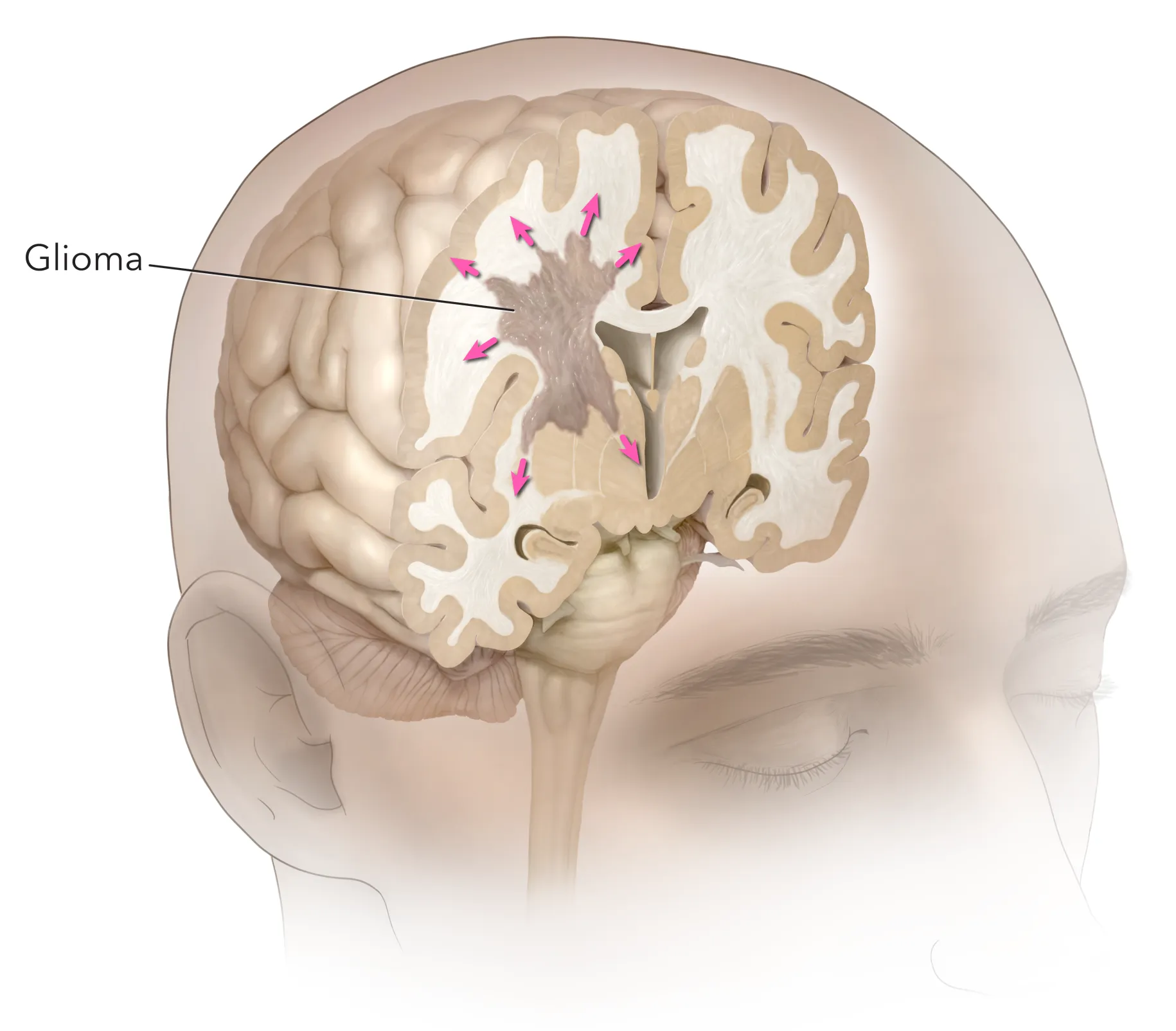
A glioma is a cancerous tumor that originates from glial cells in the brain or spinal cord. Glial cells support, nourish, and protect nerve cells. Gliomas are graded from low-grade (Grade II) to high-grade (Grade IV), with Grade IV glioblastoma being the most aggressive and common type. These tumors can affect children or adults and vary significantly in growth rate and prognosis.
Symptoms of Glioma
Symptoms develop when the tumor presses on or damages healthy brain tissue and vary depending on tumor location and size.
Common glioma symptoms include:
New onset or changing headaches, particularly worse in the morning and not improving with typical remedies, seizures often appearing as an early sign, nausea and vomiting due to increased intracranial pressure, confusion or decline in brain function including memory loss and difficulty concentrating, personality or behavior changes such as irritability, unusual emotional states, or depression, weakness or problems moving, balance difficulties, or weakness on one side of the body, vision problems including blurred or double vision or loss of peripheral vision, speech difficulties or problems expressing oneself, fatigue or drowsiness, and confusion or disorientation.
Diagnosis
Diagnosis begins with neurological examination testing balance, vision, and brain function. Imaging studies are essential for accurate diagnosis.
Imaging options include:
Magnetic Resonance Imaging (MRI) is the imaging test most often used and provides highly detailed images of the brain. MRI has sensitivity of 86.41% for detecting malignant gliomas and is particularly effective at detecting tumor edges, infiltration, and surrounding edema.
Computerized Tomography (CT) scan provides X-ray images of the brain in individual slices and may be used in acute settings or when MRI is contraindicated.
Positron Emission Tomography (PET) scan uses special dyes and radioactive materials to locate cancer cells throughout the body.
Biopsy may be performed using a specialized needle or during tumor removal surgery to study tumor cells in the laboratory and determine tumor grade and type.
Treatment Options
Surgery is the preferred initial treatment for most gliomas when safely feasible. The neurosurgeon removes as much tumor as possible without damaging critical brain functions—a procedure called maximal surgical resection. Surgery may involve open brain surgery or minimally invasive approaches depending on tumor location and size. For tumors that cannot be completely removed, debulking surgery relieves symptoms and makes remaining tumor easier to treat with other therapies. Surgery can take one to six hours or more depending on complexity.
Radiation therapy kills tumor cells using high-powered energy beams. Radiation is often combined with chemotherapy and typically begins two to four weeks after surgery. Advanced techniques such as Intensity-Modulated Radiation Therapy (IMRT) and Image-Guided Radiation Therapy (IGRT) focus radiation precisely on the tumor while sparing healthy brain tissue.
Chemotherapy uses medications to stop cancer cells from growing and multiplying. Temozolomide combined with radiation is the current standard treatment for newly diagnosed glioblastoma. Combined chemoradiotherapy increases two-year survival to 27% compared with 11% for radiation alone.
Rehabilitation following treatment improves functional outcomes and quality of life. Rehabilitation protocols include physical therapy, occupational therapy, cognitive training, and psychological support. Studies show rehabilitation can reduce disability and improve neurological function and daily activities.
The Procedure
Our process safeguards safety, function preservation, and optimal outcomes:
Consultation: Comprehensive neurological evaluation and imaging review to assess tumor characteristics, location, and surgical feasibility.
Imaging: Advanced MRI with or without contrast, CT scans, and possibly PET imaging to determine tumor grade, size, location, and relationship to critical brain structures.
Surgery: Carefully planned craniotomy using advanced intraoperative monitoring and imaging technology to achieve maximal tumor resection while protecting vision, movement, and other critical functions.
Additional treatment: Radiation therapy and chemotherapy based on tumor grade and pathology findings.
Recovery: Inpatient monitoring in the intensive care unit or high-dependency ward, early mobilization, and initiation of rehabilitation therapies.
Recovery & Aftercare
Recovery varies from patient to patient and depends on tumor grade, extent of resection, and treatment received. Physical and occupational therapy promote return to activities of daily living. Cognitive rehabilitation improves attention, memory, concentration, and executive functions, with cognitive recovery typically occurring within three to six months post-treatment. Mental health support addresses depression, anxiety, and emotional changes. Regular follow-up appointments monitor recovery progress and detect complications early. Approximately 85% of low-grade glioma patients and 68.6% of high-grade glioma patients successfully return to work following comprehensive rehabilitation.
Results You Can Expect
Tumor removal or significant reduction in tumor size, preservation of neurological function and quality of life, gradual restoration of physical and cognitive abilities through rehabilitation, improved survival outcomes, particularly with multimodal treatment combining surgery, radiation, and chemotherapy, and sustained functional improvements with long-term multidisciplinary follow-up.
Why Choose The Brain and Spine Centre
Led by Dr. Muhammad Aqeel Natt, specialist neurosurgeon with extensive expertise in brain tumor surgery and glioma management. Access to advanced imaging technologies including high-field MRI for precise preoperative planning and intraoperative guidance. Multidisciplinary team approach coordinating neurosurgery, neuro-oncology, radiation oncology, rehabilitation medicine, and psychology. Convenient location at Farooq Hospital, West Wood Branch, Lahore with state-of-the-art operating suite capabilities.
Cost of Glioma Treatment
Costs vary with tumor grade, extent of surgical resection required, need for radiation therapy and chemotherapy, duration of hospitalization, and rehabilitation services. Personalized estimates provided after consultation and imaging evaluation.
Frequently Asked Questions (FAQs)
Can I know Dr. Muhammad Aqeel Natt’s credentials?
What types of brain tumours do you treat?
Is the surgery safe?
Do I need long-term follow-up after surgery?
Are you having health problems? Contact us today!
Address Business
Contact With Us
Call Us 24/7: 0318 4065914
Working Time
Sunday: 8.30am - 19.30pm
