
At The Brain and Spine Centre, we specialize in the diagnosis and surgical treatment of neurological and spinal disorders. Dr. Muhammad Aqeel Natt, a leading neurosurgeon in Lahore, provides advanced, safe, and compassionate care for patients.
Ischemic Stroke
Ischemic stroke is a medical emergency that needs rapid expert treatment to restore blood flow to the brain and prevent permanent disability. At The Brain and Spine Centre, Dr. Muhammad Aqeel Natt provides comprehensive stroke care at Farooq Hospital, West Wood Branch, Lahore, from acute management to rehabilitation support.
Our goal is simple: reopen blocked vessels quickly, protect brain tissue, and guide recovery for the best possible quality of life.
What Is an Ischemic Stroke?
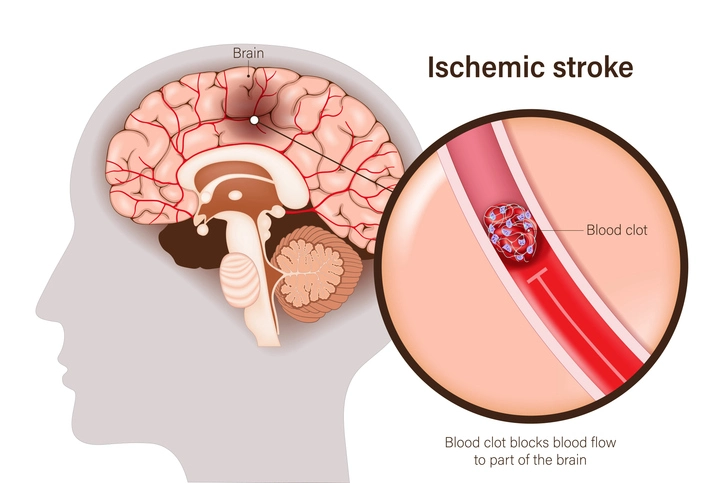
An ischemic stroke occurs when a blood vessel supplying part of the brain is blocked by a clot or severe narrowing, cutting off oxygen and nutrients to brain cells. This is the most common type of stroke, accounting for about 87% of all strokes. Blockages are usually caused by a clot forming on atherosclerotic plaque in the artery (thrombotic) or a clot traveling from the heart or large arteries to the brain (embolic).
Symptoms of Ischemic Stroke
Symptoms start suddenly and require immediate emergency care.
Common warning signs include:
- Sudden weakness or numbness of the face, arm, or leg, especially on one side of the body
- Sudden confusion, trouble speaking, or understanding speech
- Sudden trouble seeing in one or both eyes
- Sudden difficulty walking, dizziness, loss of balance or coordination
- Sudden severe headache with no known cause
Use the FAST checklist: Face drooping, Arm weakness, Speech difficulty, Time to call emergency services immediately. Every minute of delay leads to more brain cell loss.
Diagnosis
Diagnosis focuses on confirming stroke, identifying ischemic vs hemorrhagic type, and locating the blocked vessel.
Key steps include:
- Neurological examination and stroke scales such as NIHSS to assess severity
- Urgent brain imaging with non-contrast CT to exclude hemorrhage and detect early ischemic changes
- MRI (including diffusion-weighted imaging) is more sensitive for early ischemia and helps in extended or unknown-onset time windows, but CT is faster and more widely available
- Vascular imaging (CT angiography or MR angiography) to identify large vessel occlusions treatable with thrombectomy
- Blood tests, ECG, and cardiac evaluation to look for stroke risk factors and embolic sources
Treatment Options
Time-critical reperfusion treatments are central to ischemic stroke care.
- Intravenous thrombolysis (clot-busting drug): Eligible patients receive IV alteplase (tPA) or tenecteplase within a strict time window from symptom onset to dissolve the clot and restore flow. Thrombolysis significantly increases the chance of near-complete or functional recovery at 3–12 months and reduces final infarct size on imaging.
- Mechanical thrombectomy (clot retrieval): For selected patients with large vessel occlusion, endovascular thrombectomy (catheter-based clot removal) within appropriate time windows provides a large increase in disability-free recovery and functional independence.
- Supportive and secondary prevention care: Blood pressure, blood sugar, oxygen, and temperature control; antiplatelet or anticoagulant therapy when indicated; statins and risk factor optimization reduce recurrence risk.
- Rehabilitation: Early, structured rehabilitation (physiotherapy, occupational therapy, speech and swallowing therapy) is critical to regain function and independence.
The Procedure
Our process prioritizes speed, safety, and effective reperfusion:
- Emergency assessment: Immediate triage, neurological examination, and rapid CT or MRI to confirm ischemic stroke and exclude hemorrhage.
- Reperfusion decision: Evaluation against evidence-based criteria for IV thrombolysis and/or mechanical thrombectomy, with door-to-needle and door-to-groin times kept as low as possible.
- Acute treatment: Administration of thrombolytic drug and arrangement of endovascular therapy where indicated, with continuous monitoring for complications such as bleeding.
- In-hospital care: Admission to stroke unit or intensive care for close neurological monitoring, complication prevention, and early mobilization.
Recovery & Aftercare
Recovery after ischemic stroke varies widely depending on stroke size, location, and speed of treatment. Many patients show the most rapid improvement in the first weeks, with continued gains over months through rehabilitation. Early and intensive rehab improves walking, arm function, self-care, communication, and swallowing, and reduces long-term disability. Long-term management focuses on blood pressure, diabetes, cholesterol, smoking cessation, atrial fibrillation control, diet, and exercise to prevent recurrent stroke. Regular follow-up with neurology and rehab teams adjusts medications, monitors recovery, and supports return to work and daily activities.
Results You Can Expect
With timely reperfusion and expert care, many patients achieve:
- Higher rates of independence in daily activities at 3 months and 1 year following thrombolysis and/or thrombectomy
- Reduced final stroke size and lower disability scores compared with no reperfusion treatment
- Improved survival and quality of life, especially when combined with aggressive risk factor control and ongoing rehabilitation
Outcomes depend strongly on how quickly treatment is started, stroke severity, age, and underlying health conditions.
Why Choose The Brain and Spine Centre
Led by Dr. Muhammad Aqeel Natt, expert in neurosurgery and neurovascular care, with experience in coordinating acute stroke management and post-stroke interventions. Access to advanced CT and MRI imaging for rapid diagnosis and treatment planning. Integration with interventional and rehabilitation services to cover the full pathway from emergency treatment to long-term recovery. Convenient location at Farooq Hospital, West Wood Branch, Lahore with stroke-ready emergency facilities.
Cost of Ischemic Stroke Treatment
Costs vary with stroke severity, need for thrombolysis or thrombectomy, length of hospital and ICU stay, imaging requirements, and duration of rehabilitation. Personalized estimates are provided after clinical evaluation and imaging review.
Frequently Asked Questions (FAQs)
Can I know Dr. Muhammad Aqeel Natt’s credentials?
What types of brain tumours do you treat?
Is the surgery safe?
Do I need long-term follow-up after surgery?
Are you having health problems? Contact us today!
Address Business
Contact With Us
Call Us 24/7: 0318 4065914
Working Time
Sunday: 8.30am - 19.30pm
