
At The Brain and Spine Centre, we specialize in the diagnosis and surgical treatment of neurological and spinal disorders. Dr. Muhammad Aqeel Natt, a leading neurosurgeon in Lahore, provides advanced, safe, and compassionate care for patients.
Parkinson’s Disease / Deep Brain Stimulation (DBS)
Parkinson’s disease is a progressive neurodegenerative disorder caused by loss of dopamine-producing neurons in the substantia nigra, leading to motor symptoms like tremor, rigidity, bradykinesia, and postural instability, as well as non-motor features. At The Brain and Spine Centre, Dr. Muhammad Aqeel Natt offers comprehensive Parkinson’s management at Farooq Hospital, West Wood Branch, Lahore, including medical optimization, deep brain stimulation (DBS) evaluation, and multidisciplinary care for advanced cases.
Our goal is simple: optimize motor control, reduce “off” time, manage non-motor symptoms, and improve quality of life through personalized medical and surgical therapies.
What Is Parkinson’s Disease?
Parkinson’s disease results from degeneration of dopaminergic neurons in the basal ganglia, causing dopamine deficiency that disrupts movement regulation; Lewy bodies (alpha-synuclein aggregates) are pathologic hallmarks. It typically presents asymmetrically in those over 60, progressing over 10-20 years; genetic and environmental factors contribute.
Symptoms of Parkinson’s Disease
Symptoms evolve from unilateral to bilateral involvement.
Common motor features:
Resting tremor (4-6 Hz “pill-rolling”), worse at rest, suppressed by action.
Bradykinesia (slowness), rigidity (cogwheel), postural instability (falls).
Non-motor: depression, anxiety, cognitive decline, sleep disorders (REM behavior), constipation, hyposmia.
Diagnosis
Diagnosis is clinical, supported by response to levodopa.
UK Parkinson’s Disease Society Brain Bank criteria: bradykinesia plus rigidity/tremor/postural instability.
DaTSCAN (if atypical): reduced striatal dopamine transporter binding.
Exclude mimics: essential tremor, drug-induced, vascular parkinsonism.
Treatment Options
No cure; symptomatic and neuroprotective strategies used.
Medical therapy:
Levodopa/carbidopa: gold standard for motor symptoms; start low, titrate slowly.
Dopamine agonists (pramipexole, ropinirole): delay motor complications in young-onset.
MAO-B inhibitors (rasagiline, selegiline), COMT inhibitors (entacapone), amantadine for fluctuations.
Advanced therapies:
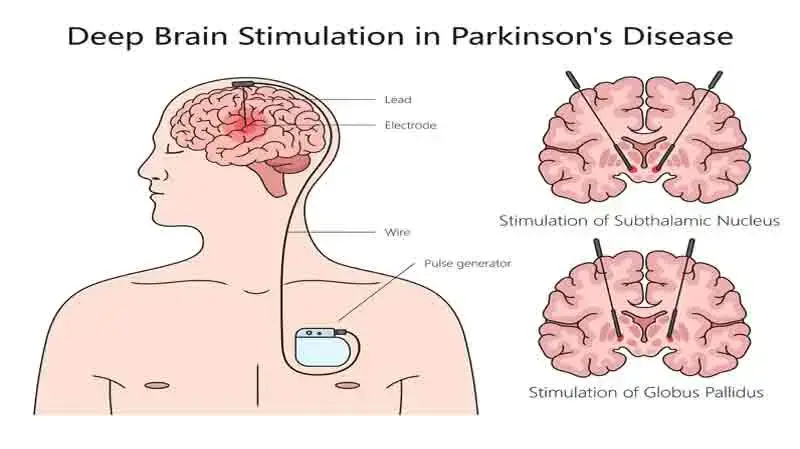
DBS: subthalamic nucleus or globus pallidus interna for levodopa-responsive patients with complications (dyskinesia, fluctuations).
Pump therapies: apomorphine, levodopa-carbidopa intestinal gel (LCIG).
Physiotherapy, speech therapy, occupational therapy essential.
Surgical Management (DBS)
At The Brain and Spine Centre:
Microelectrode recording-guided DBS implantation for advanced Parkinson’s with motor fluctuations/dyskinesia despite optimization.
Bilateral STN or GPi leads; programmable neurostimulator.
Recovery & Aftercare
Medical: lifelong titration; monitor for complications (dyskinesia, psychosis).
DBS: programming over weeks; 50-70% “off” time reduction, improved UPDRS.
Multidisciplinary: neurology, neurosurgery, PT/OT/ST, psychiatry.
Results You Can Expect
Early levodopa: excellent symptom control 5-10 years.
DBS: sustained benefit 5+ years; reduces medications, dyskinesia.
Progression continues; median survival 10-15 years post-diagnosis.
Why Choose The Brain and Spine Centre
Neurosurgical expertise in DBS for Parkinson’s; functional neurosurgery program with microelectrode recording. Coordinated care with movement disorder specialists, rehab therapists. Evidence-based therapy escalation from meds to advanced interventions.
Cost of Parkinson’s Disease Treatment
Varies by medical vs DBS (includes leads, battery, programming); estimates post-UPDRS assessment.
Frequently Asked Questions (FAQs)
Can I know Dr. Muhammad Aqeel Natt’s credentials?
What types of brain tumours do you treat?
Is the surgery safe?
Do I need long-term follow-up after surgery?
Are you having health problems? Contact us today!
Address Business
Contact With Us
Call Us 24/7: 0318 4065914
Working Time
Sunday: 8.30am - 19.30pm
